Latest Posts
- Independent Bookstore Day at Woozles!
 This Saturday is Independent Bookstore Day and I get to hang out with two other wonderful local authors/illustrators at Woozles, Canada’s oldest independent children’s bookseller! It’s going to be a busy, bustling day, even with the silly road construction outside on Shirley St. Lauren Soloy, Rebecca Thomas and I will be there to chat, signContinue reading “Independent Bookstore Day at Woozles!”
 - Early reader reviews for Children of the SS Atlantic!
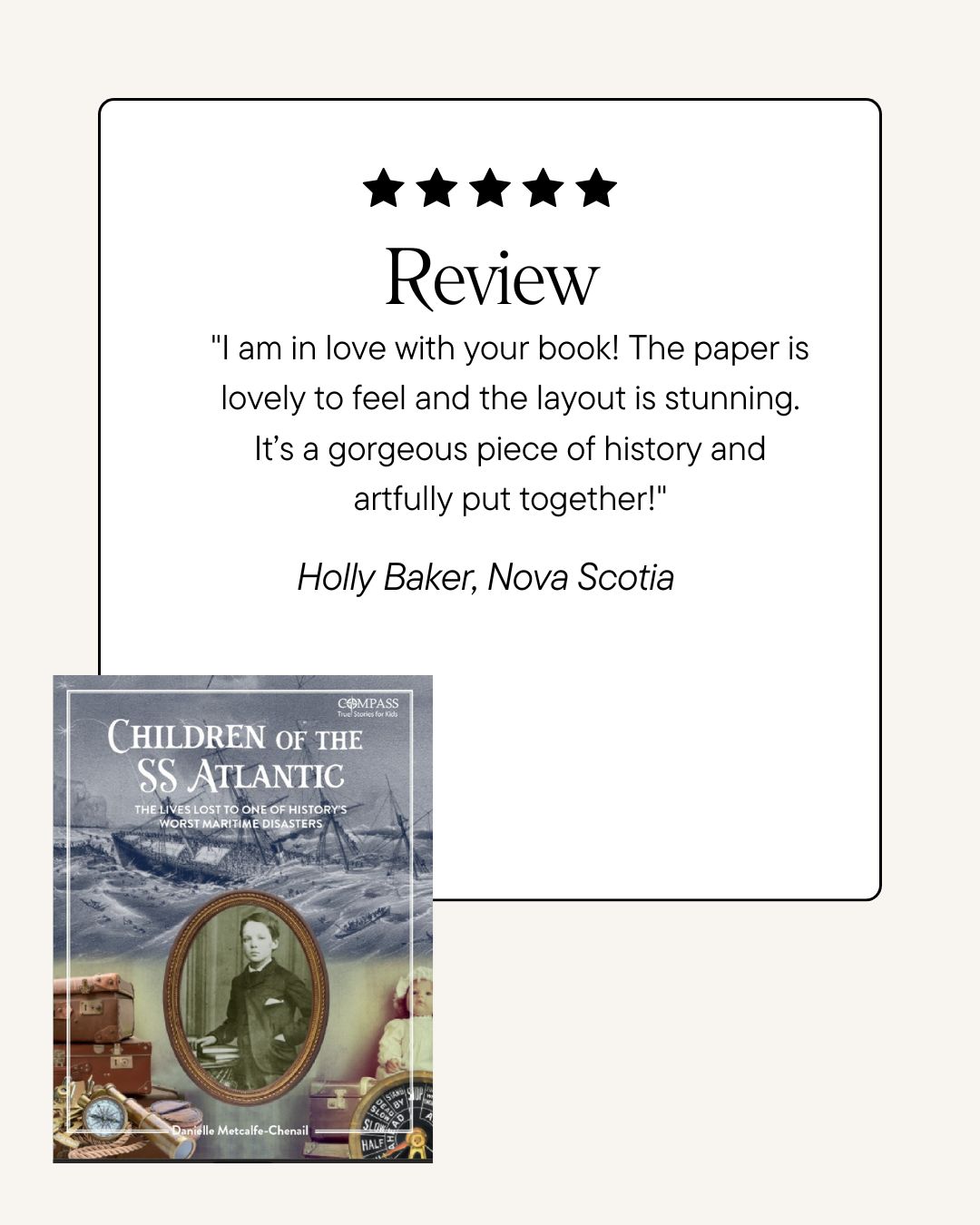 It’s always a little nerve-wracking when you put a new book – or any creative project – out into the world. And definitely vulnerable. I’m so grateful to these early readers for sharing their kind reviews of the book, and for passing along bon mots about my first school visits with this new title!
 - Halifax-area events this month!
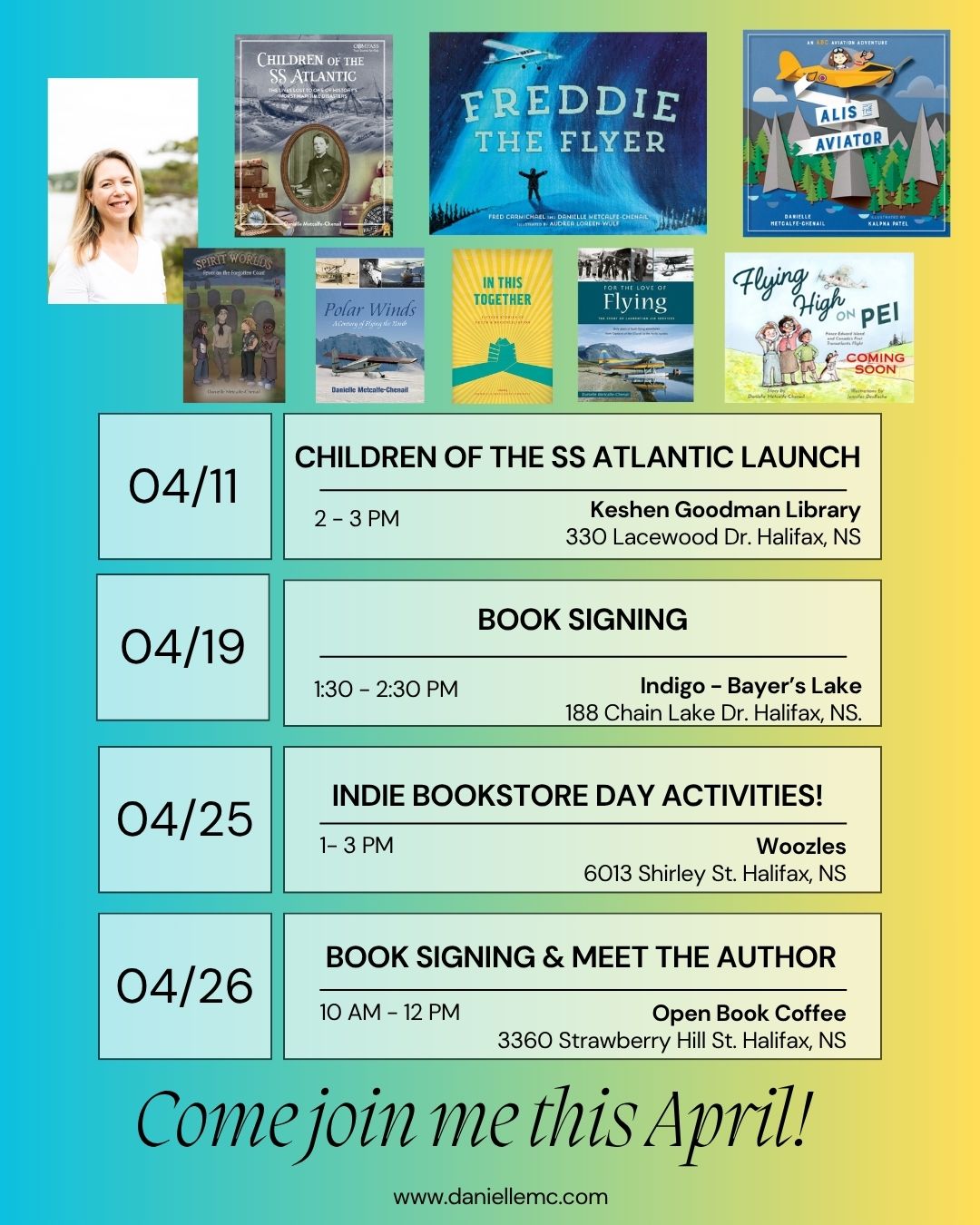 If you live in the Halifax, Nova Scotia region or are travelling to the area, you can grab copies in-person at the above events. I would love to see you! More details on this part of my website. I am in the process of setting something up for Yarmouth, NS in May and have loose plans for eventsContinue reading “Halifax-area events this month!”
 - Children of the SS Atlantic Halifax Book Launch!
 Halifax-area friends, I hope to see you on Saturday! I’ve ordered custom cookies, have a period costume to wear, and even somehow convinced my teenage son to do a quick Q&A with me (hopefully he doesn’t grill me too much!). Plus, I’ve got door prizes and giveaways that I can’t wait to share with you!Continue reading “Children of the SS Atlantic Halifax Book Launch!”
 - Sweet Moments at SS Atlantic Remembrance Ceremony
 This past week I was so lucky to get to attend the SS Atlantic remembrance ceremony at St. Paul’s in Terence Bay, Nova Scotia, followed by a reception at the SS Atlantic Interpretation Centre just next door. It turned into an unofficial min-book launch as I delivered thank you copies of Children of the SSContinue reading “Sweet Moments at SS Atlantic Remembrance Ceremony”
 - Halifax Bookstravaganza March 28!
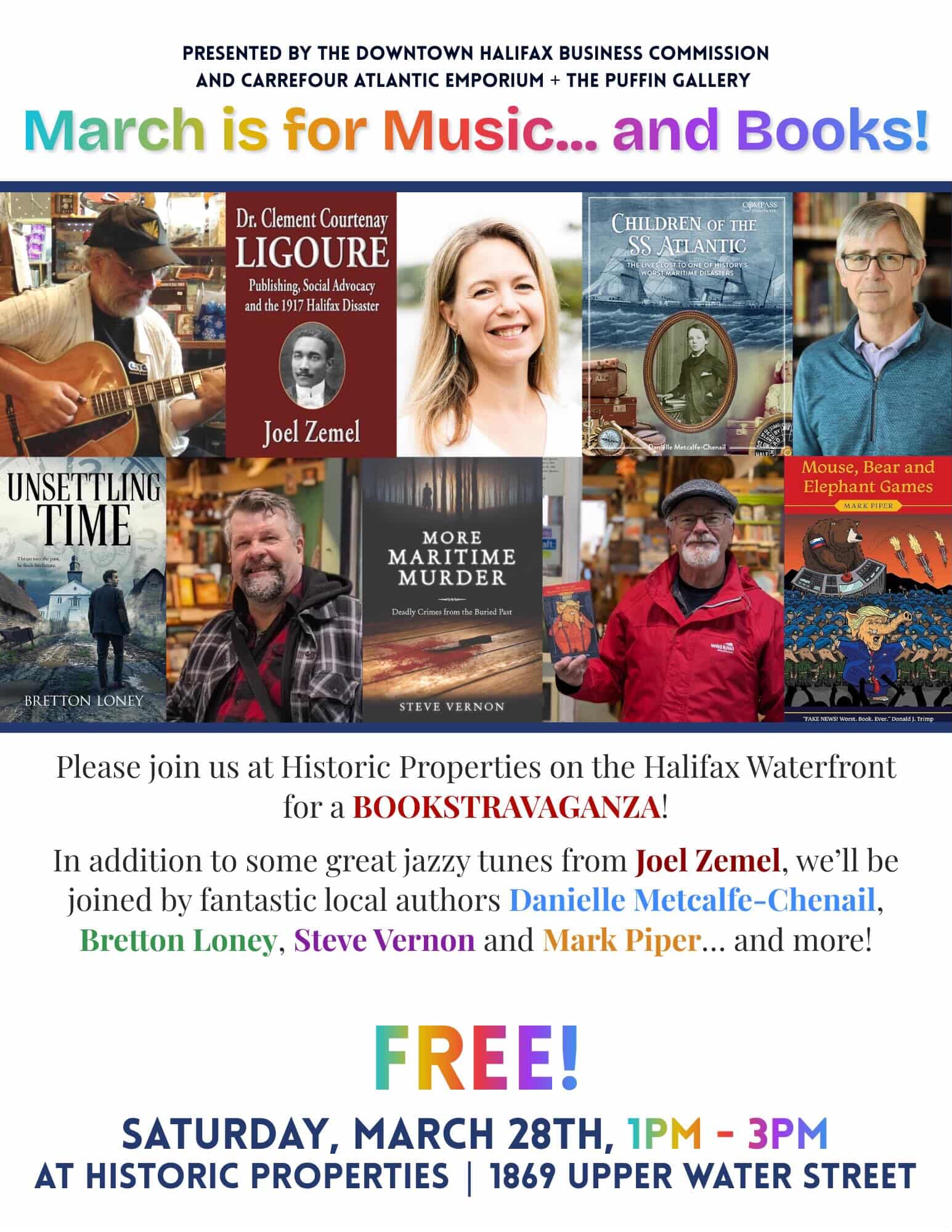 Once we dig ourselves out of all this snow here in Halifax, we’ll be keen to hit the town for some books, music, and more! Hope to see you at Carrefour Atlantic Emporium on the Halifax Waterfront Saturday afternoon for a good time with lots of local authors and musicians.
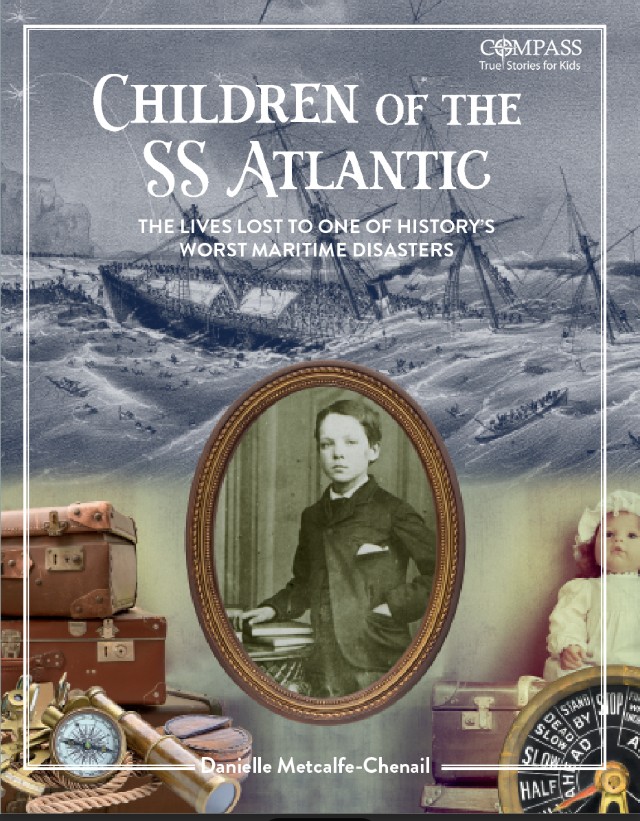
 - Great SS Atlantic Reads for All Ages!
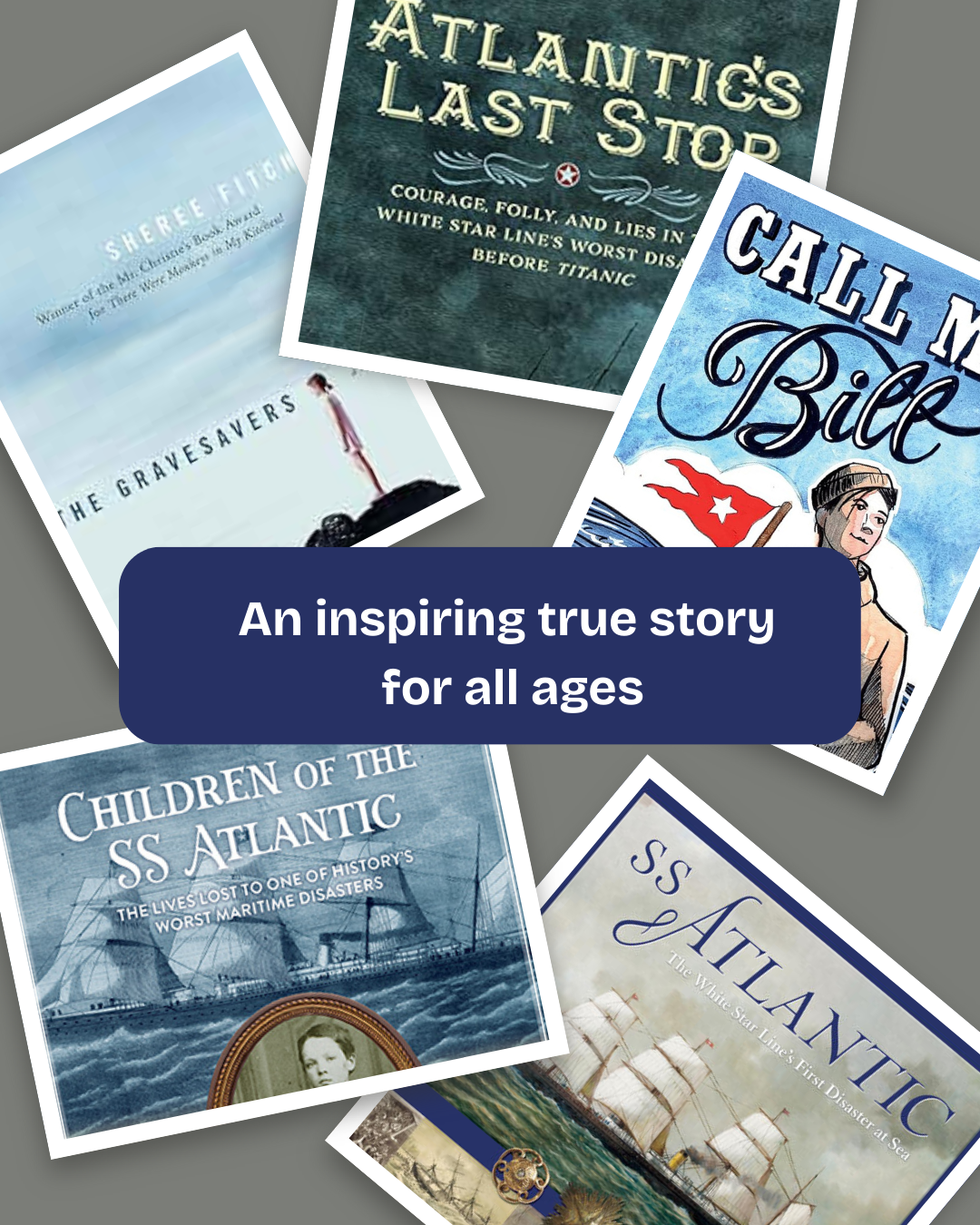 My research for Children of the SS Atlantic brought me to these fantastic books for all ages. My nonfiction title is the first for readers roughly ages 7-10, but there are others that are great for teens and adults. Check out: I also wrote a picture book for 5-8 year olds called The Boy, TheContinue reading “Great SS Atlantic Reads for All Ages!”
 - Spring events in Halifax and Saint John!
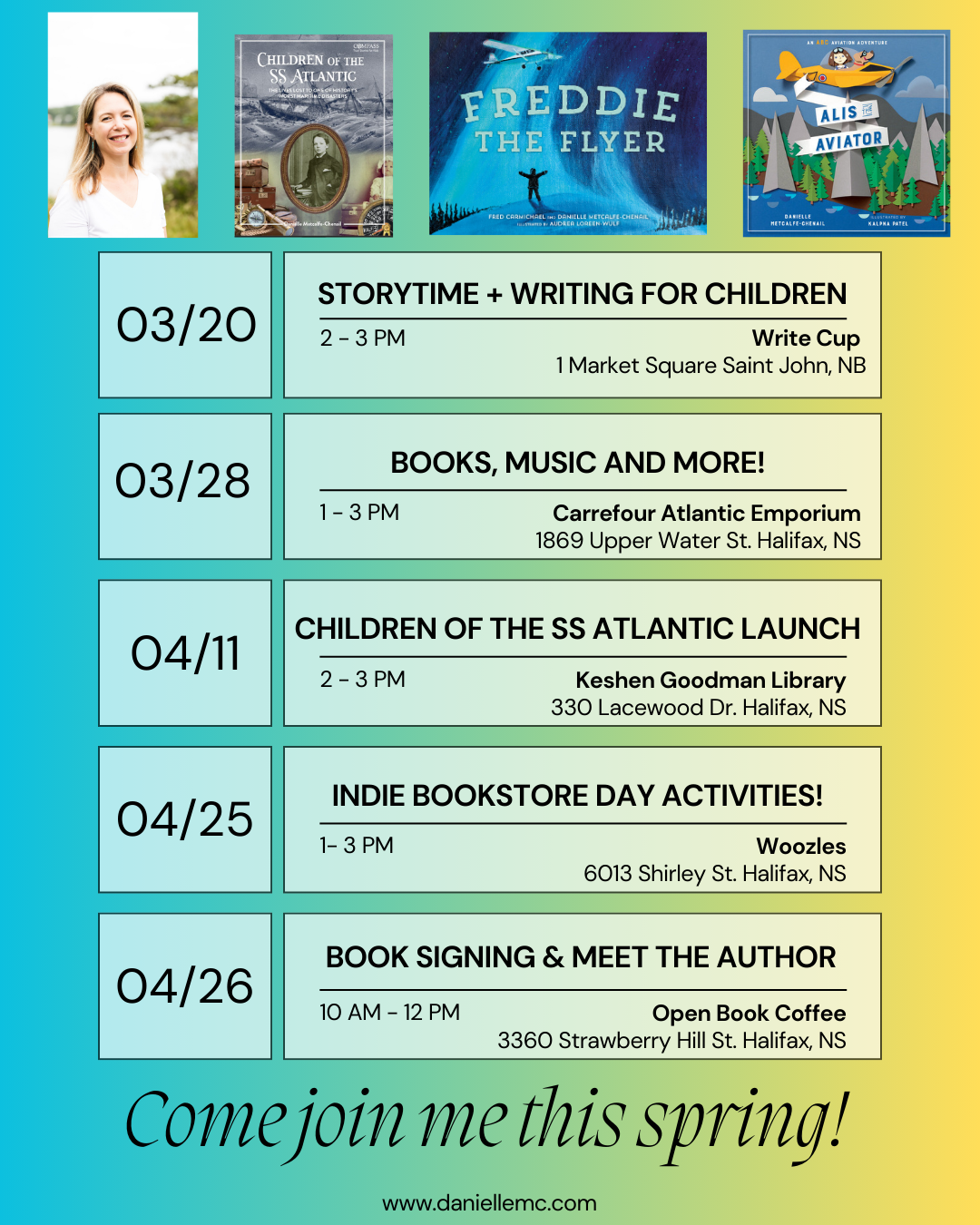 After a winter spent hibernating with my research and writing projects, I’m emerging with the wildlife for some really fun author events – solo and with friends! Please check my other blog posts for fore details. Hope to see you out! Please feel free to bring your questions about writing, publishing, and more to theseContinue reading “Spring events in Halifax and Saint John!”
 - Storytime + Writing for Children in Saint John, NB!
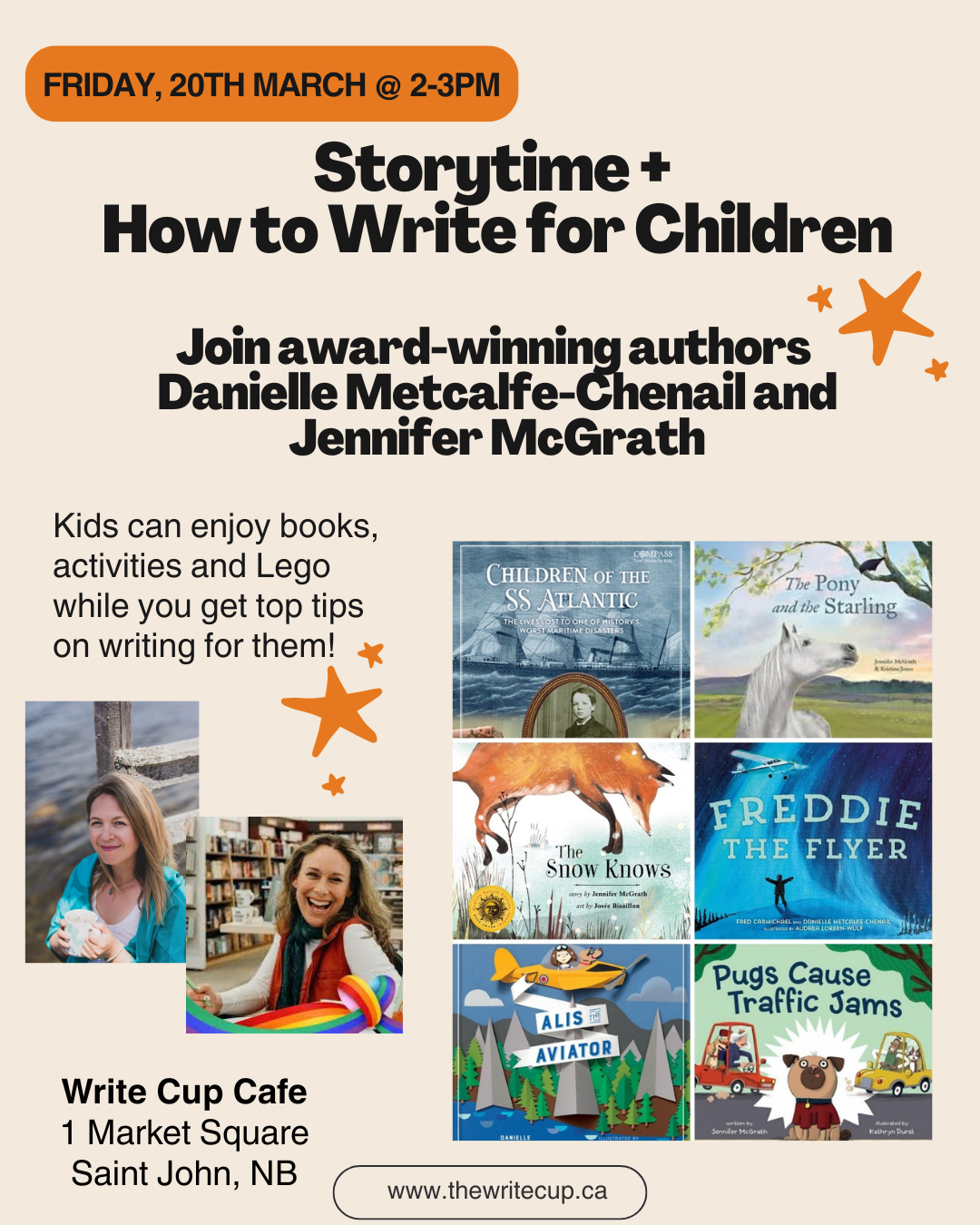 Saint John, New Brunswick here we come! Do you have young kids in your life who like storytimes and activities? Are you an aspiring kidlit author of any age? Here’s something for the whole family! Jennifer McGrath and I will be at the amazing Write Cup book store next Friday, March 20th from 2-3pm toContinue reading “Storytime + Writing for Children in Saint John, NB!”
 - Book Launch April 11th in Halifax!
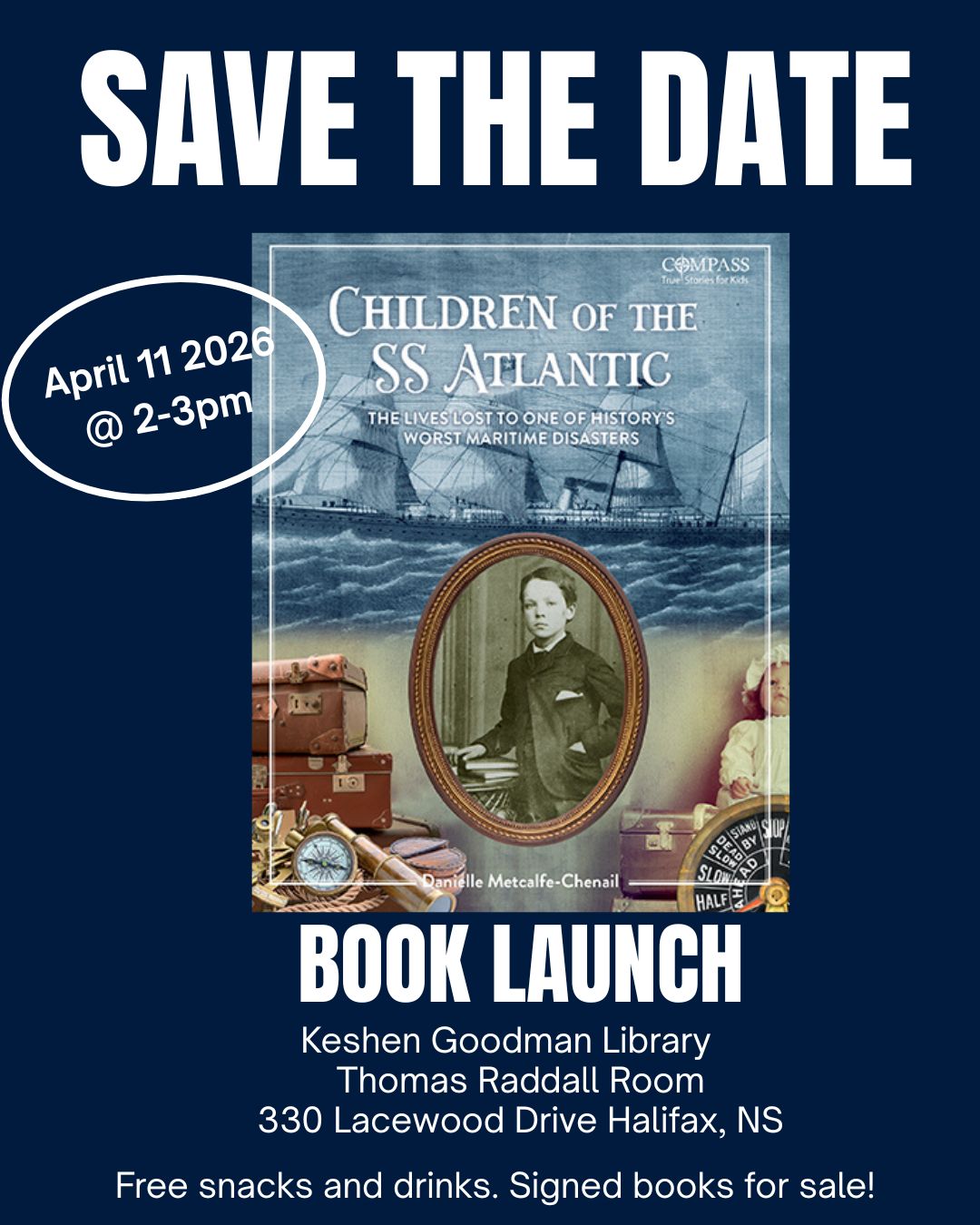 Eek! I can’t believe it’s almost time to launch this book into the world. If you’re in the Halifax area and have 8-12 year olds in your life (although this will be a launch party for all ages!), please come on out Saturday, April 11th from 2-3pm. Keshen Goodman has graciously accepted to host theContinue reading “Book Launch April 11th in Halifax!”
About Me
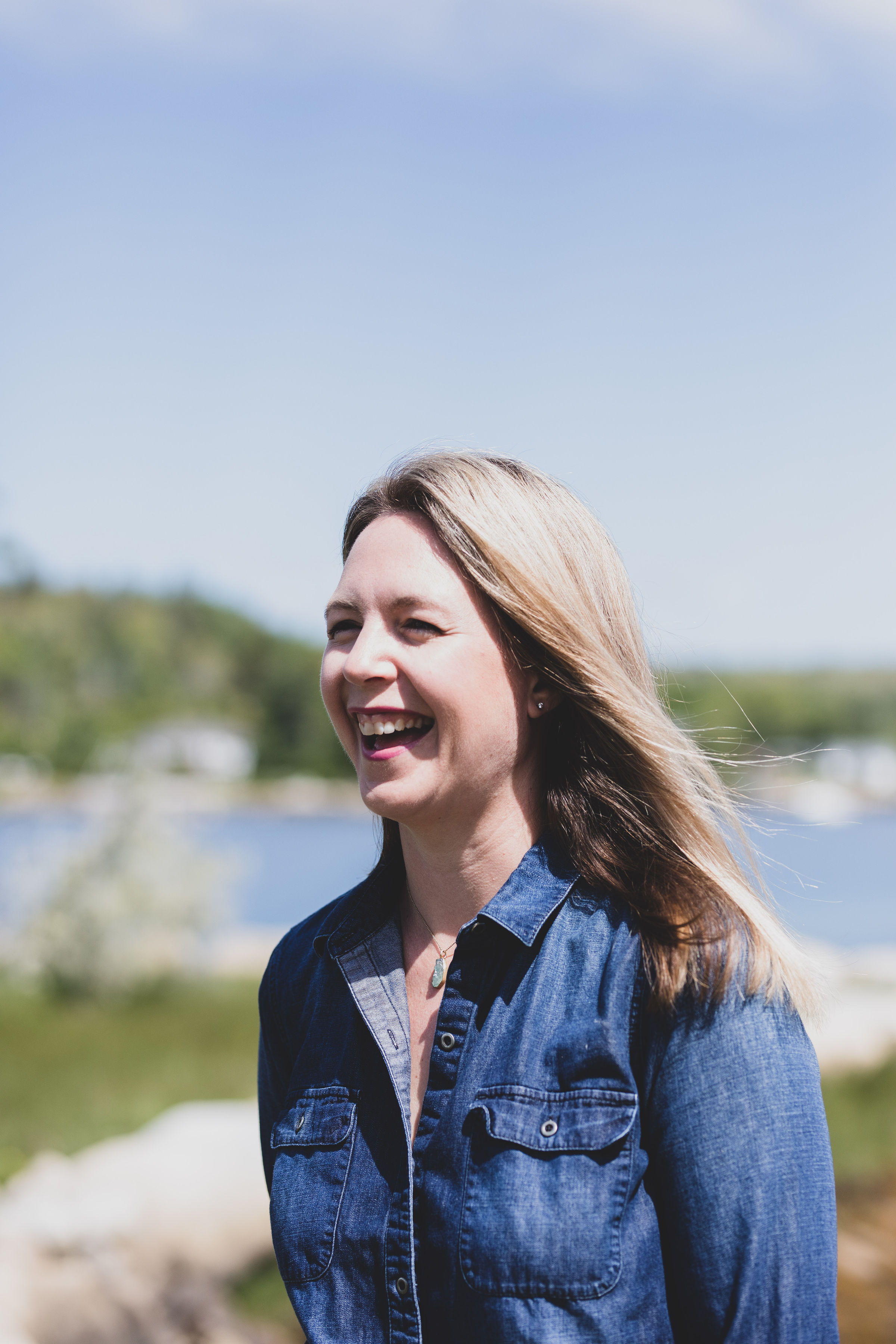
I’m a multi-genre and multi-passionate author, writing coach, editor and storyteller. Probably best known for my inclusive aviation histories and picture books – I’m also working on memoir and book club fiction. I love getting lost in research, travelling, and going on adventures with my little family. It makes it all the sweeter when I’m reading fireside (or seaside) in my Nova Scotia, Canada home.
Stay connected
Read all about it!
Get my news directly to your inbox four times a year. (Psst: sometimes there are prizes!)